


น้องรู้ก่อนเราจะพูด: สัตว์เลี้ยงอ่านอารมณ์เราออกได้จริงไหม


งานวิจัยชี้ว่าหมาจับความเปลี่ยนแปลงในร่างกายคนได้จากกลิ่น — นั่นแปลว่าตอนคุณเครียด น้องรู้ก่อนคุณจะพูดอะไรออกมาด้วย

ที่คลินิกย่านรังสิต คลอง 5 ธัญบุรี มีเจ้าของถามเราบ่อยมากว่า "หมอ น้องเขารู้ใจหนูจริงเหรอ วันไหนหนูเครียด เขาจะมานอนแนบตลอด" คำตอบคือรู้จริง แต่ไม่ใช่เวทมนตร์ครับ เขาอ่านจาก "ข้อมูล" ที่เราปล่อยออกไปทุกวันโดยไม่รู้ตัว

## จมูกของเจ้าตูบละเอียดกว่าที่เราคิด
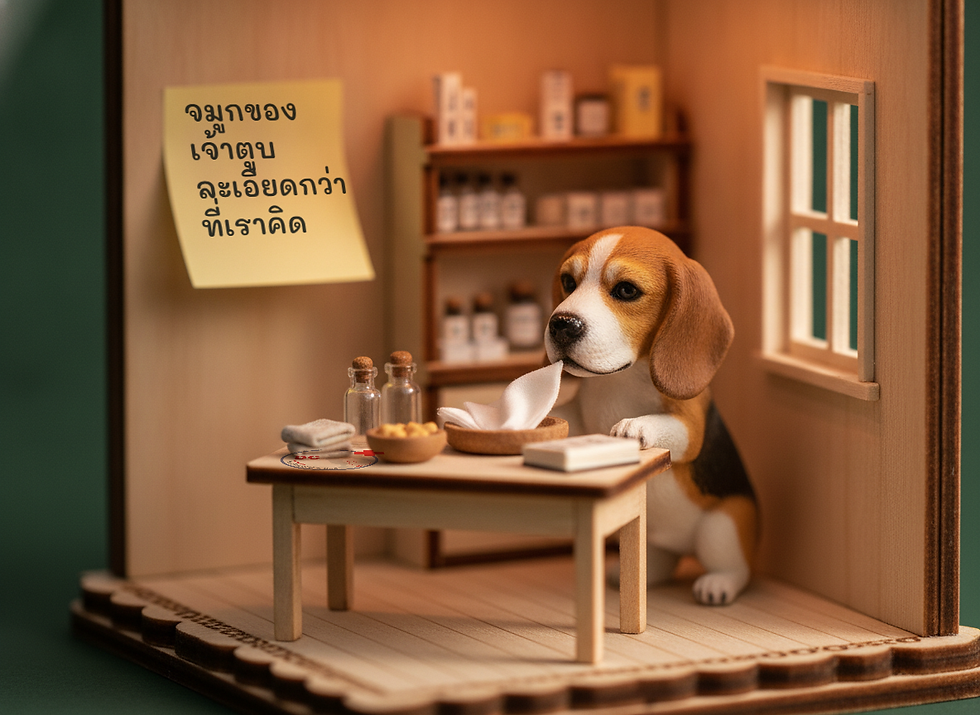
ร่างกายคนปล่อยสารระเหยออกมาทางเหงื่อ ผิวหนัง และลมหายใจอยู่ตลอด เวลาเราเครียดหรือไม่สบาย ฮอร์โมนเปลี่ยน กลิ่นตัวก็เปลี่ยนตามไปด้วยแบบที่จมูกคนจับไม่ได้ แต่สุนัขที่มีเซลล์รับกลิ่นมากกว่าเราหลายสิบเท่าจับได้

ช่วงนี้มีงานวิจัยจากต่างประเทศที่คนพูดถึงกันมาก คือการฝึกน้องหมาให้ดมกลิ่นจากผิวหนังและเหงื่อของคน เพื่อชี้สัญญาณของโรคพาร์กินสัน (โรคทางระบบประสาทที่พบมากเป็นอันดับสองรองจากอัลไซเมอร์) ผลเบื้องต้นน่าสนใจมาก แต่ขออนุญาตพูดตรง ๆ ว่ามันยังเป็นงานวิจัยระยะต้นในกลุ่มตัวอย่างไม่ใหญ่ ยังไม่ใช่เครื่องมือวินิจฉัยโรค และไม่ได้แปลว่าน้องที่บ้านจะบอกโรคของเราได้

สิ่งที่เรื่องนี้ยืนยันได้จริง ๆ คือ จมูกของเพื่อนซี้สี่ขารับข้อมูลจากตัวเราเยอะกว่าที่เราคิด

## ไม่ใช่แค่กลิ่น — เขาอ่านเสียงและตารางชีวิตเราด้วย

น้อง ๆ ไม่เข้าใจประโยคที่เราพูด แต่เขาอ่านน้ำเสียง จังหวะการหายใจ ความเร็วในการเดิน และความตึงของกล้ามเนื้อเราได้ดีมาก บวกกับความจำเรื่อง "กิจวัตร" ที่แม่นยำจนน่าทึ่ง

เจ้าเหมียวก็อ่านเราออกเหมือนกัน แค่แสดงออกต่างจากสุนัข น้องแมวมักไม่วิ่งมาปลอบ แต่จะเลือกเฝ้าดูจากระยะห่าง หรือหายไปอยู่มุมสูงเงียบ ๆ ซึ่งเจ้าของหลายคนเข้าใจผิดว่าน้องไม่แคร์

## เวลาเราเครียด พฤติกรรมน้องเปลี่ยนตรงไหน

สิ่งที่เราเห็นบ่อยที่คลินิกเวลาบ้านมีเรื่องเปลี่ยน เช่น ย้ายบ้าน มีสมาชิกใหม่ เจ้าของเปลี่ยนกะทำงาน:

- น้องหมาเห่ามากขึ้น เดินวนตามติด หอบแม้อากาศไม่ร้อน เลียอุ้งเท้าซ้ำ ๆ
- น้องแมวฉี่นอกกระบะ กินน้อยลง เลียขนจนแหว่ง หรือซ่อนตัวนานผิดปกติ
- ทั้งสองแบบ: นอนไม่เป็นเวลา ท้องเสียเป็นพัก ๆ

ข้อสำคัญที่อยากให้จำไว้ — อาการกลุ่มนี้ทับซ้อนกับโรคจริงเกือบทั้งหมด การเลียเท้าซ้ำ ๆ อาจเป็นภูมิแพ้ผิวหนังหรือเห็บหมัด การฉี่นอกกระบะอาจเป็นกระเพาะปัสสาวะอักเสบหรือนิ่ว การกินน้อยลงในสัตว์เลี้ยงสูงวัยอาจเป็นเรื่องฟันหรือไต ดังนั้นอย่าด่วนสรุปว่า "น้องแค่เครียด" แล้วรอดูอาการไปเรื่อย ๆ

## ปรับที่ตัวเราก่อน ได้ผลกว่าที่คิด

1. คงตารางเดิมให้มากที่สุด เวลาให้อาหาร เวลาเดินเล่น เวลานอน แม้ชีวิตเราจะวุ่น
2. ลดโทนเสียง พูดช้าลง เวลาเราหายใจช้าลง น้องมักผ่อนลงตาม
3. จัดมุมปลอดภัยให้หนึ่งจุด เบาะในมุมสงบ กล่องสำหรับเจ้าขนฟู ที่ไม่มีใครไปกวน
4. ให้เขาได้ใช้จมูก ซ่อนขนมให้ดมหา หรือเดินเล่นให้ได้ดมทาง ช่วยลดความเครียดได้ดีกว่าการวิ่งเยอะ ๆ
5. เวลาบ้านจะเปลี่ยนอะไร ค่อย ๆ แนะนำ ให้เวลาเขาปรับตัวเป็นสัปดาห์ ไม่ใช่เป็นวัน

## สรุป

สัตว์เลี้ยงอ่านเราออกจริง ผ่านกลิ่น เสียง และกิจวัตร ไม่ใช่ลางสังหรณ์ เพราะฉะนั้นเวลาเราเครียด เขาก็รับไปด้วย และถ้าเราปรับที่ตัวเองได้ พฤติกรรมของลูกรักก็มักดีขึ้นตาม

แต่ถ้าปรับแล้วสองสามสัปดาห์ยังไม่ดีขึ้น หรือมีอาการทางร่างกายร่วม เช่น เลียจนขนแหว่ง ฉี่กระปริดกระปรอย กินน้อยลง น้ำหนักลด อย่าเดาเองครับ ทักมาคุยกับเราทาง Messenger หรือ LINE @dogcorner เล่าอาการและช่วงเวลาที่เริ่มเปลี่ยนมาได้เลย ทีมเราจะช่วยดูว่าควรพามาตรวจหรือปรับที่บ้านก่อนดี

DC pet Hospital & spa · 52/59-60 ถ.รังสิต-นครนายก (คลอง 5 ฝั่งขาเข้า) ต.รังสิต อ.ธัญบุรี ปทุมธานี · เปิดทุกวัน 08:00–22:00 · โทร 02-577-2561 หรือ 064-969-9514

## English version

# They Know Before You Say a Word: Can Your Pet Really Read Your Mood?

Research shows dogs can pick up on changes inside the human body through smell — which means when you're stressed, your dog already knows before you say a single word.

At our clinic in Rangsit, Khlong 5, Thanyaburi, owners ask us this all the time: "Doc, does he actually know how I feel? On bad days he won't leave my side." The answer is yes, he does — but it isn't magic. He's reading the information we give off every single day without realising it.

## A dog's nose picks up more than we think

Our bodies constantly release volatile compounds through sweat, skin and breath. When we're stressed or unwell, our hormones shift and our scent shifts with them — far below what a human nose can detect, but well within range for a dog with tens of times more scent receptors than we have.

There's a study making the rounds right now in which dogs were trained to sniff human skin and sweat samples to flag signs of Parkinson's disease (the second most common neurological disease after Alzheimer's). The early results are genuinely interesting, but let's be straight about it: this is early-stage work on small sample groups. It is not a diagnostic tool, and it does not mean the dog on your sofa can detect your illness.

What it does confirm is simpler and more useful — your dog's nose takes in far more about you than you'd guess.

## It's not only scent — they read your voice and your routine

Pets don't understand our sentences, but they read tone, breathing rhythm, walking speed and muscle tension remarkably well. Add to that a memory for daily routine that's almost unnervingly precise.

Cats read us too; they just show it differently. A cat usually won't rush over to comfort you — she'll watch from a distance, or quietly retreat to a high, safe spot. Plenty of owners misread that as not caring.

## Where your stress shows up in their behaviour

Here's what we commonly see when something at home changes — a move, a new baby, a new work schedule:

- Dogs: more barking, shadowing you room to room, panting when it isn't hot, licking one paw over and over
- Cats: urinating outside the litter box, eating less, over-grooming to the point of bald patches, hiding for unusually long stretches
- Both: disrupted sleep, on-and-off loose stools

One important caveat. Almost every sign on that list overlaps with real medical problems. Repeated paw licking can be skin allergy or fleas and ticks. Going outside the litter box can be cystitis or bladder stones. Reduced appetite in an older pet can be dental disease or kidney trouble. So please don't settle on "he's just stressed" and wait it out indefinitely.

## Start with yourself — it works better than you'd expect

1. Keep the routine steady. Same feeding, walking and bedtime, even when your own week is chaos.
2. Drop your volume and slow your speech. When your breathing slows, theirs often follows.
3. Give them one safe corner — a bed in a quiet spot, a box for the cat, somewhere nobody disturbs.
4. Let them use their nose. Hiding treats to sniff out, or a walk where they're allowed to stop and smell, lowers stress more effectively than pure exercise.
5. Introduce changes gradually. Give them weeks to adjust, not days.

## In short

Pets really do read us — through scent, sound and routine, not sixth sense. That means our stress lands on them too, and when we adjust ourselves, their behaviour usually settles.

But if you've made those changes and two or three weeks on nothing has improved, or there are physical signs alongside it — bald patches from licking, straining to urinate, eating less, losing weight — don't guess. Message us on Messenger or LINE @dogcorner, tell us what you're seeing and when it started, and we'll help you work out whether to come in or adjust at home first.

DC pet Hospital & spa · 52/59-60 Rangsit-Nakhon Nayok Rd. (Khlong 5, inbound side), Rangsit, Thanyaburi, Pathum Thani · Open daily 08:00–22:00 · Tel 02-577-2561 or 064-969-9514


ความคิดเห็น